The putting gate drill: how to set it up and why it works

If you only practise one putting drill, make it the gate. It takes thirty seconds to set up, needs two tees, and gives you honest feedback on the one thing that decides most short putts: where your putter face points at impact.
Why start line matters so much
On a short putt there is very little room for error. The direction the ball starts comes mostly from the angle of the putter face at impact, much more than from the path of the stroke. So if the ball is not starting where you aimed it, the face is the first place to look. The gate turns that into something you can see on every putt.
Version 1: the start-line gate
- Find a straight putt of about six feet.
- Push two tees into the green about 30 cm in front of the ball, on your target line, a little wider than a ball apart.
- Hit putts. The ball must pass through the gate without touching either tee.
When you can roll ten in a row through cleanly, move the tees a few millimetres closer together. When that gets easy, move the gate further from the ball.
Version 2: the putter-head gate
Push two tees into the green either side of your putter head, just wider than the head, level with the ball. Make strokes without touching either tee. This checks that the putter head returns to the ball the same way each time.
Do not make this gate too tight. The putter head naturally swings on a small arc, and you want room for that. The point is to stop big wobbles, not to force a perfectly straight line.
Reading your misses
- Ball clips the same tee every time: your face is open or closed at impact, or your aim is off. Check aim first with an alignment stick on the ground.
- Misses go both ways: usually the hands are controlling the face. The stroke needs to come from the shoulders.
- Fine on short putts, worse on longer ones: often a backswing that is too long, followed by a slow-down or a push through impact.
Make it harder
Combine the two gates: putter-head gate at the ball, start-line gate in front. Then add a rule: ten in a row through both, or start again. It is surprising how much harder the last few are.
When the gate keeps showing a problem
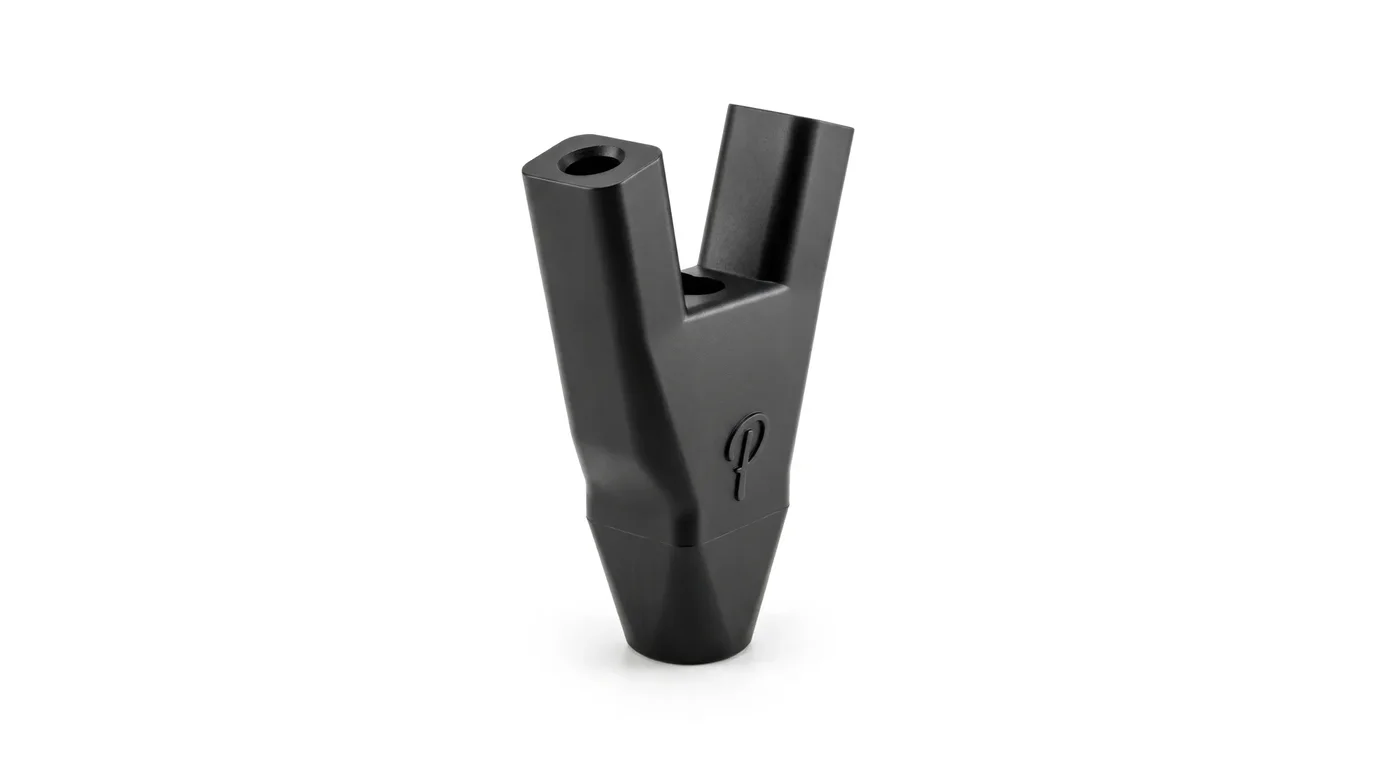
If misses go both ways no matter what you try, your wrists are probably taking over. Joining your arms to the putter fixes the cause rather than the symptom. You can do that with two alignment sticks fixed to the shaft so they run up your arms, which is what Pendulo does, and then go back to the gate to check the result.
Keep reading
For more ways to practise with the sticks in your bag, see six alignment stick putting drills. If misses go both ways, read how to stop your wrists breaking down.

Practise the one-piece stroke with Pendulo
Clips to your putter below the grip and holds two alignment sticks up your arms, so you feel it the moment your wrists take over. 45 g, no tools.
Buy on Amazon UKQuestions golfers ask
How wide should the putting gate be?
For a start-line gate, about a ball and a half wide to begin with, then narrow it as you improve. For a putter-head gate, leave roughly a centimetre either side of the head.
How far in front of the ball should the gate be?
Around 30 cm (a foot) is a good place to start. Further away makes it harder, because a small error in face angle grows with distance.
What can I use if I do not have tees?
Two coins, two golf balls or two pencils on a carpet all work.