Putting training aids: the main types and how to choose one
Search for putting training aids and you will find hundreds of them. Most fall into a handful of types, and each one teaches a different thing. The best aid for you is the one that gives clear feedback on your main fault. Here is a plain guide to the types.
Start with the fault, not the gadget
Before you buy anything, film ten short putts face on and down the line. Look for one main issue: aim, start line, wrist movement, pace, or head movement. Then choose the type of aid that targets it. Our guide to why you miss short putts walks through the common causes.
1. Putting mirrors
Teaches: eye position, shoulder alignment and setup.
Suits: golfers who set up inconsistently or are not sure where their eyes sit over the ball.
Free version: a phone propped up to film your setup.
2. Gates
Teaches: start line and where the face points at impact.
Suits: almost everyone. It is the single most useful drill for short putts.
Free version: two tees. See the gate drill guide.
3. Rails and putting tracks
Teaches: aim and the path of the putter head.
Suits: golfers whose putter wanders off line on the way back.
Free version: one or two alignment sticks on the ground.
4. Arm-lock and connection aids
Teaches: keeping the arms and putter together so the shoulders drive the stroke.
Suits: golfers whose wrists flick or break down, and whose misses go both ways.
Free version: an alignment stick held against the grip so it runs up your lead forearm.
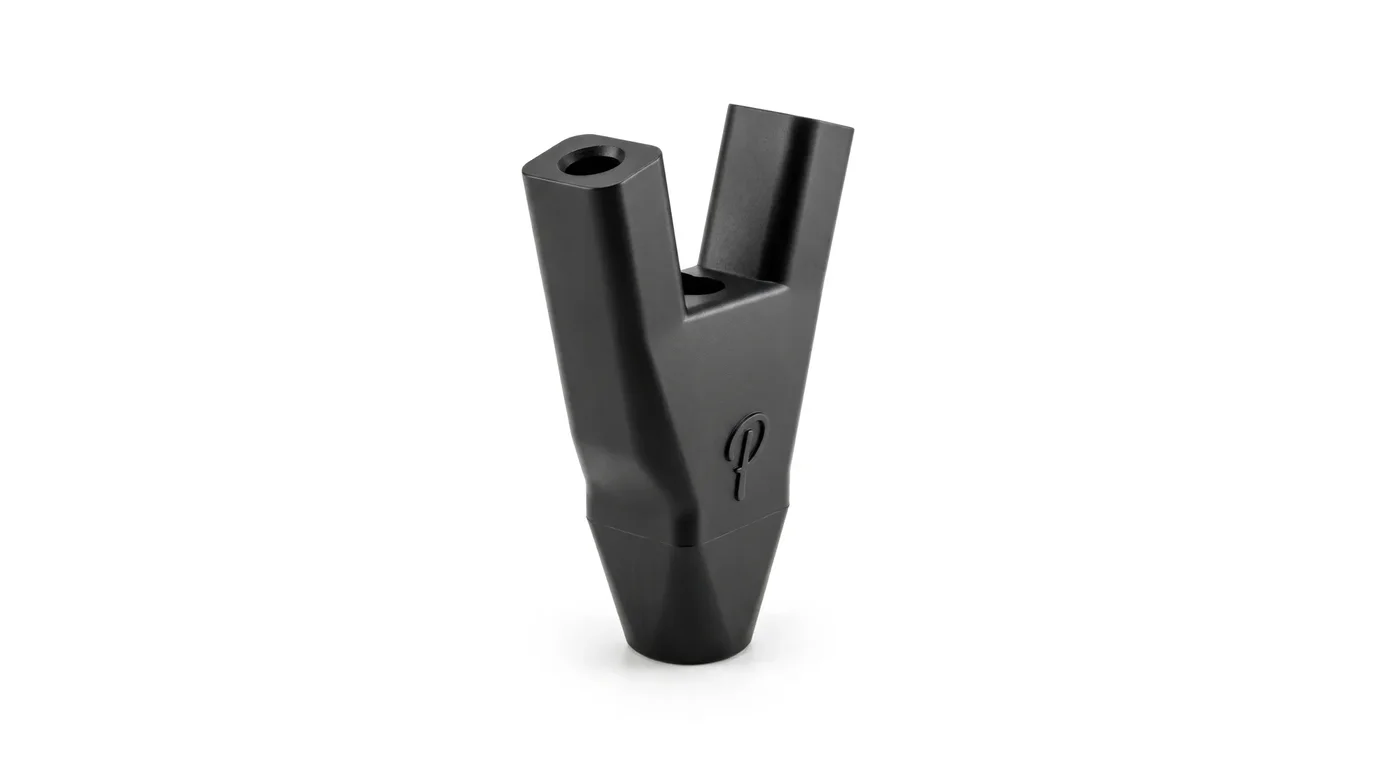
This is the type Pendulo belongs to. It clips to the shaft below the grip and holds two standard alignment sticks up the outside of both arms into the armpits, so it connects both arms, not just one.
5. Pace and distance aids
Teaches: speed control, especially on long putts.
Suits: golfers who three-putt from distance.
Free version: an alignment stick laid behind the hole as a backstop, or the ladder drill.
6. Putting mats and indoor greens
Teaches: lets you practise at home when you cannot get to a green.
Suits: golfers who want short, regular sessions in winter or in the evening. A carpet works too: see our home practice routine.
How to choose
- One fault, one aid. Pick the type that matches your main issue.
- Quick to set up. If it takes five minutes to set up, you will stop using it.
- Feedback you feel or see on every putt. The best aids tell you straight away, not three putts later.
- Fits what you own. Check it fits your putter and uses kit you already have.
Keep reading
Six alignment stick putting drills and the pendulum putting stroke, explained simply.

Practise the one-piece stroke with Pendulo
Clips to your putter below the grip and holds two alignment sticks up your arms, so you feel it the moment your wrists take over. 45 g, no tools.
Buy on Amazon UKQuestions golfers ask
Do putting training aids actually work?
They help when they give clear feedback on one specific fault and you use them for short, regular sessions. They will not help if you do not know what you are trying to fix.
Can I make my own putting aids?
Yes. Tees make a gate, an alignment stick makes a rail, and a phone camera works as a mirror. Buy a dedicated aid when you want feedback that is hard to get otherwise.
Are training aids allowed in a round?
No. Training aids are for practice only. Take them off before you play.